- Home
- About
- Practice Areas
- Personal Injury Overview
- Car Accidents
- Bicycle Accidents
- Burn Injury
- Brain Injury
- Dog Bite
- Vibrio Vulnificus
- Infection from Saline Solution
- Motorcycle Accidents
- Pedestrian Accident
- Product Liability
- Scooter Accident
- Slip and Fall Accidents
- Spinal Cord Injury
- Underinsured Driver Accident
- Rideshare Accident
- Truck Accident
- Wrongful Death
- View All +
- Testimonials
- Resources
- Cities
- Español
- Contact

Helping Colorado’s accident
victims for over 25 years.
victims for over 25 years.
Your Car Was Fully Repaired. But It’s Worth Less. Here’s What Colorado Law Lets You Do About It.
POSTED BY
June 19, 2026
Car accidents
After a car accident that wasn’t your fault, the process usually goes something like this: you file a claim, someone comes to estimate the damage, the other driver’s insurance pays for the repairs, the body shop does good work, and the car looks the way it did before. You get it back, it drives fine, and you assume the property damage side of things is settled.
What most people don’t know is that there’s a second loss, one that never gets repaired, no matter how good the body shop is. The moment your car’s accident history appears on Carfax or Auto Check, its resale value drops. A buyer who has the choice between your car and an identical car with a clean history will pay less for yours. That difference is real money, and in Colorado, you’re entitled to recover it.
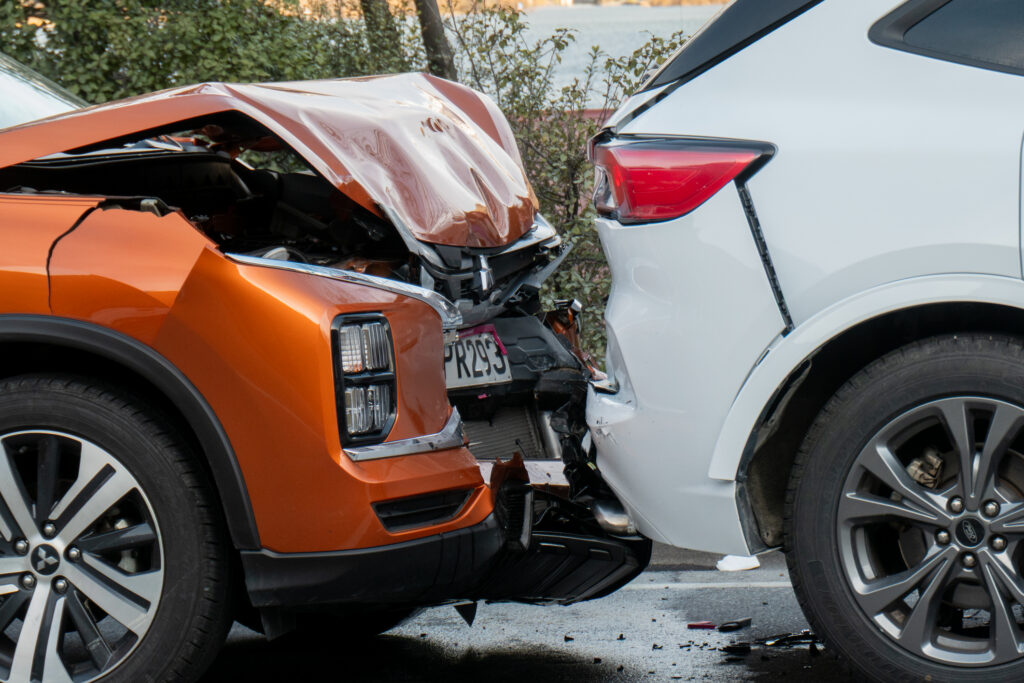
What Diminished Value Actually Means
Diminished value is the gap between what your vehicle was worth before the accident and what it’s worth after; even after it’s been fully and professionally repaired. It has nothing to do with repair quality. A perfect repair job doesn’t erase the accident from a vehicle’s history report. And buyers know it. Dealerships know it. Anyone who’s ever traded in a car and watched the offer come back lower because of a prior accident knows it, too.
Colorado courts have recognized the right to recover diminished value for decades. Two Colorado Supreme Court cases, Trujillo v. Wilson (1948) and Larson v. Long, established the principle clearly: when someone’s negligence damages your vehicle, you’re entitled to recover the full difference in its value, not just the cost of repairs.
“When I sit down with a client after an accident, property damage is almost always the last thing we talk about because there’s so much else going on,” says Scott O’Sullivan of The O’Sullivan Law Firm. “But diminished value is a real loss that most people walk away from without realizing it. The insurance company isn’t going to bring it up. They’re going to write the repair check and hope you move on. It’s one of the little things we focus on to maximize compensation.”
How the Claim Works in Colorado
A diminished value claim in Colorado is a third-party claim, meaning it’s filed against the at-fault driver’s insurance, not your own. You can’t bring this claim under your own collision or uninsured motorist coverage; it goes against the policy of the person who caused the accident.
To make the claim, you need to establish two things: what the car was worth immediately before the accident, and what it’s worth after repairs. The difference is your diminished value. That calculation typically requires a professional appraisal from a certified, independent appraiser — not a number you generate yourself, and not the formula the insurance company uses to minimize the claim.
That last point matters. Insurance companies often rely on internal formulas that cap diminished-value recovery at 10% of the vehicle’s pre-accident value, or on other methodologies that systematically underestimate the actual market loss. Those formulas aren’t the law. They’re negotiating positions. A credible, independent appraisal is the foundation of a legitimate claim.
“The insurance company has a formula. It has a number they’re comfortable paying, and it’s usually a fraction of what the actual market loss is,” Scott says.
The statute of limitations for a diminished value claim in Colorado is two years from the date of the accident.
When Diminished Value Claims Are Most Significant
Not every accident produces a meaningful diminished value claim. The cases where it matters most tend to share certain characteristics:
- Newer vehicles: — a three-year-old car with a Carfax entry loses more value than a 2011 with 140,000 miles
- Significant structural damage: — frame damage, airbag deployment, major system repairs
- Low pre-accident mileage:
- Vehicles with high resale value: — trucks, SUVs, luxury cars, and vehicles in strong demand hold more to lose
For the right vehicle and the right accident, a diminished value claim can be worth several thousand dollars. It’s not a minor footnote — it’s a real piece of your loss that the at-fault driver’s insurance is responsible for covering.
The Catch Most People Run Into
Insurance adjusters are not going to volunteer this information. Their job is to close the claim. When the repair check clears, and you sign the release, you may be signing away your right to bring a diminished-value claim if the release is written broadly enough. This is one of the reasons it’s worth understanding your rights before you start signing documents.
“People come to me after they’ve already settled the property damage portion, and sometimes there’s still something we can do,” Scott says. “But sometimes the release they signed was broader than they realized. The smarter move is to understand what you’re entitled to before you settle anything.”
A Quick Illustration
You own a 2022 truck in excellent condition, worth $42,000 at the time of the accident. A driver runs a red light and hits you broadside. The frame is damaged, the airbags deploy, and the repair comes to $14,000. The body shop does excellent work — you’d never know by looking at it. But when you try to trade it in two years later, the dealer pulls the Carfax, sees the accident, and offers you $4,500 less than comparable clean-history trucks. That $4,500 didn’t come from poor repairs. It came from the fact that the accident happened. And that loss is traceable directly to the driver who ran the red light.
That’s what a diminished value claim is built to recover.
What to Do?
If you’ve been in an accident that wasn’t your fault and your vehicle sustained significant damage:
- Don’t sign a broad property damage release without understanding what it covers. Ask specifically whether it includes diminished value.
- Get an independent appraisal from a certified appraiser who specializes in vehicle valuation, not an estimate from the insurance company’s preferred source.
- Document your vehicle’s pre-accident value using Kelley Blue Book, NADA, and comparable listings for your specific make, model, mileage, and condition.
- Talk to an attorney before settling if the numbers are significant. The claim must be filed against the at-fault driver’s insurer, and having legal support changes the dynamic of that negotiation.
Colorado is one of roughly 15 states that clearly recognize the right to recover diminished value from an at-fault driver. Most people hurt in accidents in this state never pursue it — not because they don’t have the right, but because nobody told them the right exists. Now you know.
Scott O’Sullivan has represented injured Coloradans from his Denver office for over 25 years. If you’ve been in an accident and want to understand the full picture of what you’re entitled to recover, including diminished value, call The O’Sullivan Law Firm at (303) 388-5304. The consultation is free, and you’ll speak with an attorney.
