- Home
- About
- Practice Areas
- Personal Injury Overview
- Car Accidents
- Bicycle Accidents
- Burn Injury
- Brain Injury
- Dog Bite
- Vibrio Vulnificus
- Infection from Saline Solution
- Motorcycle Accidents
- Pedestrian Accident
- Product Liability
- Scooter Accident
- Slip and Fall Accidents
- Spinal Cord Injury
- Underinsured Driver Accident
- Rideshare Accident
- Truck Accident
- Wrongful Death
- View All +
- Testimonials
- Resources
- Cities
- Español
- Contact

Helping Colorado’s accident
victims for over 25 years.
victims for over 25 years.
100 MPH in Colorado? Speeding Penalties Are Increasing
POSTED BY
September 7, 2026
distracted driving
Colorado drivers who repeatedly rack up serious speeding violations, or who are caught driving 100 mph or faster, now face additional consequences under a new state law.
Senate Bill 26-035 took effect on August 12, 2026. The law does not broadly increase every speeding ticket in Colorado. Instead, it adds license points for certain repeat speeding violations and creates an additional penalty for drivers traveling at extreme speeds.
Additional Points for Repeat Speeding
Colorado already assigns driver’s license points based on the severity of a speeding violation. For example, driving 20 to 39 mph over the applicable speed carries six points under the state’s standard point schedule.
The new law adds more points when qualifying speeding violations happen repeatedly.
For driving 20 mph or more above the reasonable and prudent speed, or exceeding Colorado’s maximum lawful speed of 75 mph, the additional penalties are:
- Second violation within 12 months: 2 additional points
- Third or subsequent violation within 24 months: 4 additional points
- Fifth or subsequent violation within five years: 8 additional points
Those points are in addition to the points already assessed for the underlying speeding violation.
The accumulation can become significant quickly. For most Colorado drivers age 21 or older, accumulating 12 points within 12 months or 18 points within 24 months can trigger a license suspension proceeding.
Driving 100 MPH Now Carries an Extra Four Points
The law also creates a separate consequence for extreme speed.
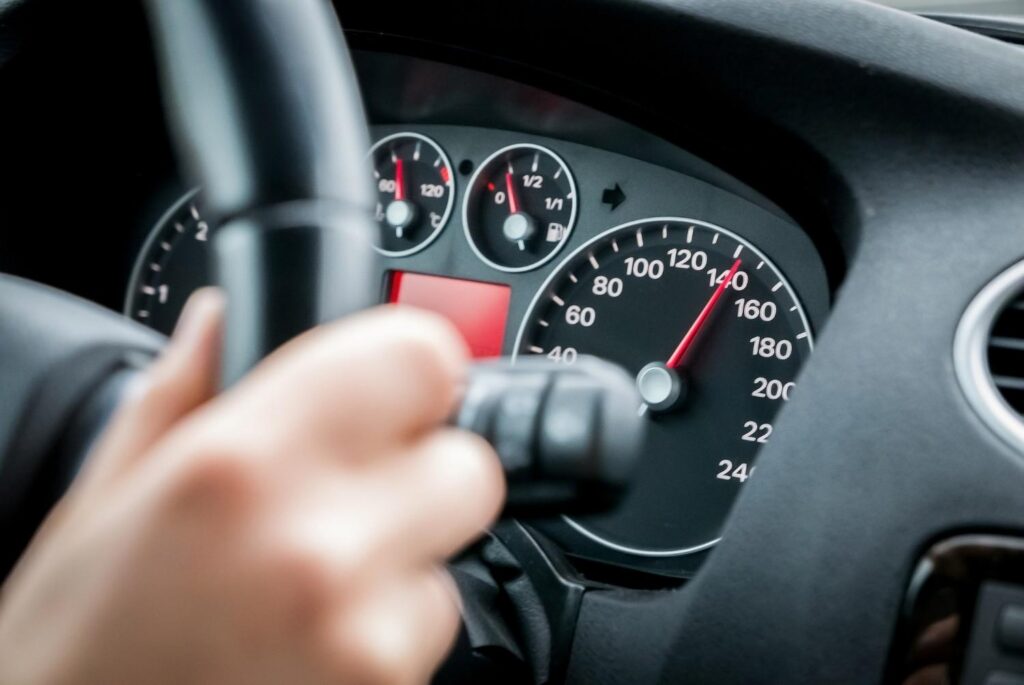
Anyone convicted of driving 100 mph or faster receives four additional driver’s license points, on top of whatever points apply to the underlying speeding violation.
So this is not simply a new four-point speeding offense. The additional four points stack on top of the existing penalty.
Colorado’s focus on 100 mph driving runs counter to a broader speeding problem on state roads. CDOT reports that 232 people were killed in speed-related crashes in 2025, and more than 1,200 people died in such crashes between 2021 and 2025. Colorado State Patrol also investigated more than 500 fatal or injury crashes involving speeding drivers in 2025.
Repeat Offenders May Have to Go to Court
There is another practical change.
Drivers who reach the repeat-violation thresholds covered by the new law will receive a summons and complaint rather than a standard penalty assessment notice. In other words, qualifying repeat violations can no longer always be handled simply by paying the ticket.
That distinction is easy to overlook, but it is an important part of the new law. Colorado is treating a pattern of serious speeding differently from an isolated ticket.
The Law Also Targets Dangerous Passing
SB26-035 is not limited to speeding.
Improperly passing another vehicle in a clearly marked no-passing zone now carries six driver’s license points. The law also clarifies that a no-passing zone can be marked by a solid yellow line or pavement markings, and directs CDOT to prioritize additional signage on roads where crashes involving illegal passing are increasing.
That is particularly relevant on Colorado’s two-lane mountain and rural highways, where an impatient pass can put vehicles traveling in opposite directions on a collision course.
Do the Right Thing
This part is simple: slow down.
Speeding saves less time than most people think, and the risk goes up fast. The faster you are driving, the less time you have to react, the farther you need to stop, and the harder the impact will be if something goes wrong.
Colorado’s new penalties are another reason to pay attention, but they should not be the main reason. The better reason is that everyone else on the road is counting on you to drive responsibly.
At The O’Sullivan Law Firm, we see what excessive speed can do to people and families. If a speeding or reckless driver injured you, call or text us at 303-388-5304. We’ll help you understand your options and what to do next.
